For Ethan Williams, the 1891 B&O Depot was never just an old building slated for demolition, it was a lesson in what happens when you refuse to let something disappear. Now, as the depot enters its final chapter of restoration, the Wayne County Schools Career Center (WCSCC) senior is discovering that the same instincts that drove him to save a piece of history are the ones being sharpened every day in his Machining Technologies class.
Williams, now in his second year of the Machining Technologies program, has spent a decade working to save the depot. It’s a project that started when he was just 8 years old, looking out his dining room window at the tracks behind his house. "I've always loved history and loved the things that built our town," Williams said. When he learned the depot had been untouched for nearly two decades, he went to his father with a simple question: what's going to happen to it?
That question turned into a movement. What began as a group of three grew to 25 members and, over ten years, raised roughly $400,000 to save, relocate, and begin restoring the building.
From History to Hands-On
Now the depot is entering a new role, one that Williams sees as a natural extension of its original purpose. The passenger side will become a small museum telling the story of Rittman's railroad and industrial roots. The freight side will serve as a community meeting room. And in a basement that didn't originally exist, a makerspace is taking shape. Engineers added ten feet of new space beneath the historic structure stocked with laser engravers, 3D printers, and other equipment donated by the Romich Foundation.
For Williams, that maker space is the piece that ties everything together. "I didn't want it to be another museum where you're just looking at old stuff," he said. Instead, he hopes the space, which one member has nicknamed the "Innovation Station", will give kids a hands-on introduction to skilled trades most never encounter: CNC programming, welding, blueprint reading, 3D design. "It kind of combines the two things," he said of the building itself. "You have the old 1891 wood construction, all manual labor, and then downstairs it's all computer controlled. It's two eras colliding."
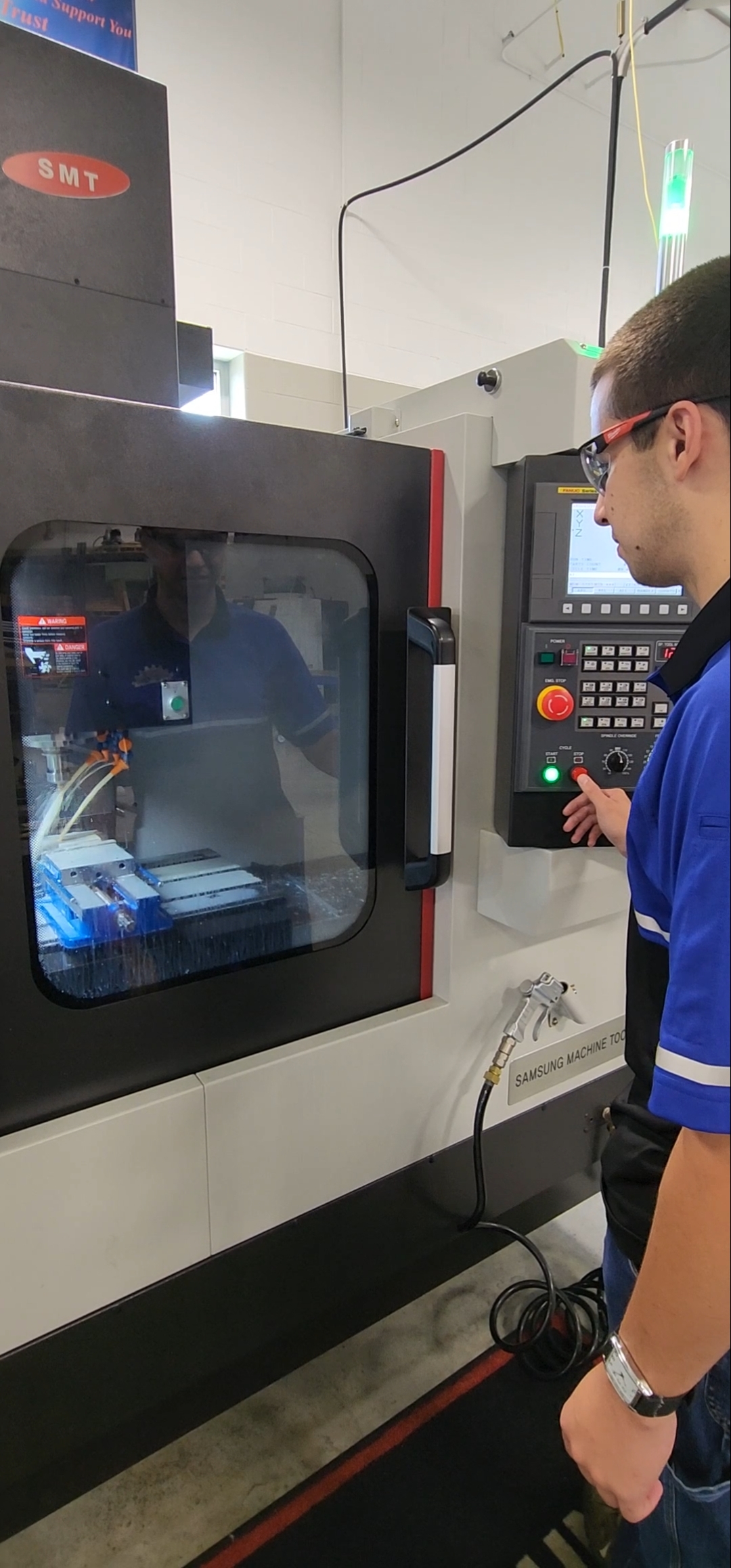
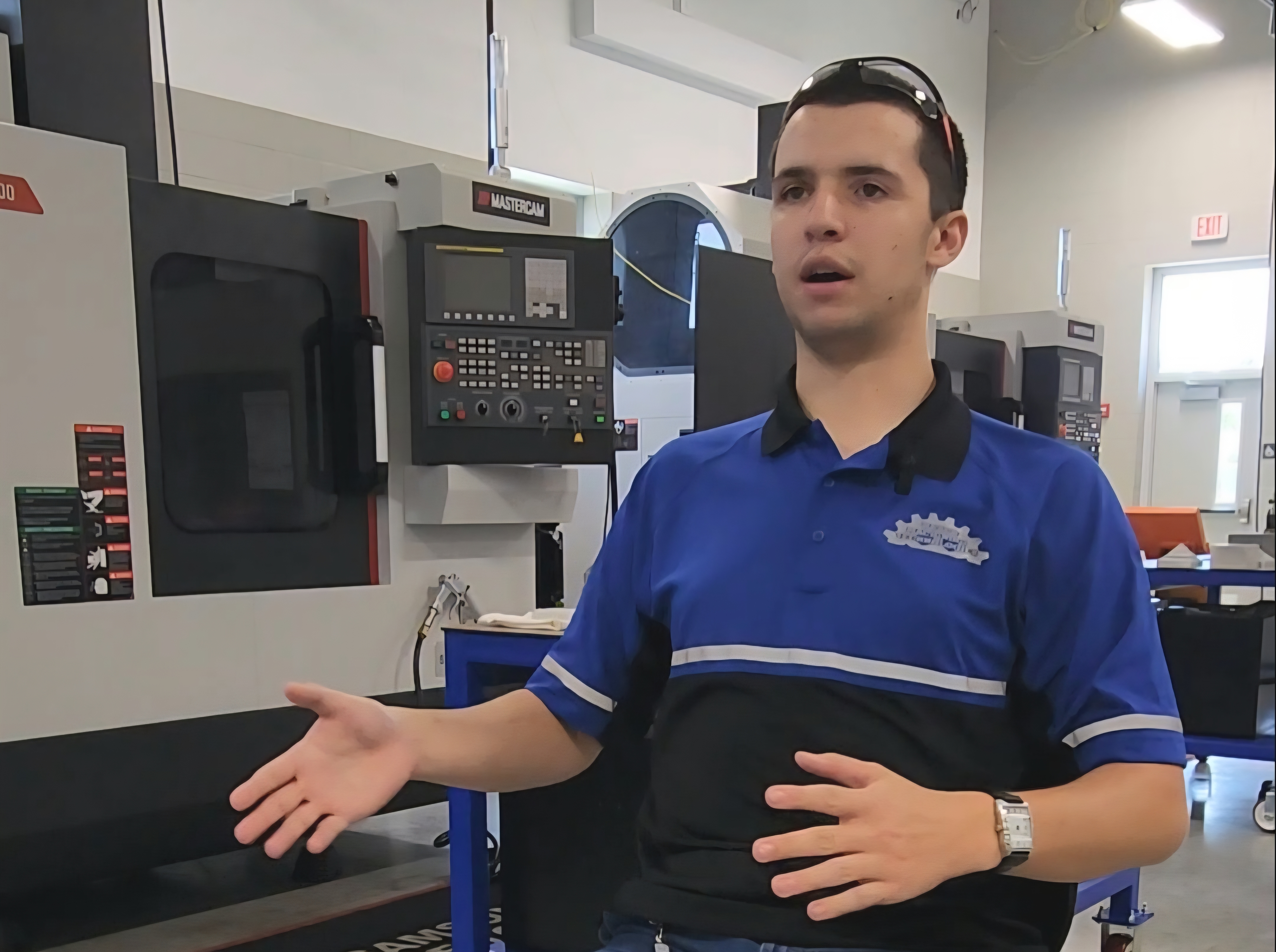
That collision mirrors Williams' own education. In WCSCC’s manual machining lab, he learned to physically feel how a lever, knob, or button moves a machine before ever translating that motion into CNC code. "I'm a very visual learner, and I can't really visualize code," he said. "Working in the manual lab first, it’s like the pregame before you get to the CNC lab. It really helps you understand what's actually happening." It's a lesson he sees echoed in the industry's future: even as automation and AI take on more program writing, he believes machinists will always be needed to maintain, troubleshoot, and understand the machines. "There has to be a human factor involved," he said.
Skills that Span from Career to Volunteer Work
Williams credits much of his growth, both on the depot project and in the classroom, to the leadership skills he's built at WCSCC, crediting instructor Bruce Steiner with helping him and his classmates develop the communication and public speaking skills that leadership demands. "Learning how to present and learning how to listen, those are two of the biggest things," Williams said. Whether it's a classmate asking for a second set of eyes on a part in the machine shop, or a volunteer needing help lifting a fixture at the depot, he sees the same skill at work: knowing how to step up, communicate clearly, and support the people around you. "Leadership means you can step up to a project almost anytime and help others out," he said.
Looking ahead, Williams plans to stay in machining, with his sights set on railroad restoration work, recreating parts that haven’t been manufactured in 60 or 70 years. It's a niche he discovered through a family connection to the trade, and one that lets him merge his career path with his lifelong passion. "I want to mix my trade with my hobby," he said, "and find that middle ground."
As the depot moves toward its next chapter, Williams sees the future clearly: a trade with deep roots and a wide-open future, built by people willing to keep something moving forward instead of letting it disappear.